Building the Foundation for a Scalable Internal Design Team
Joining Genesis in 2022, I became the primary internal design resource to a 200-person organization with hubs across six cities globally. As demand grew across Marketing, Sales, Product, HR, and Leadership, I began operating beyond an individual contributor role—building the design system, managing the creative production team, and creating the first structured intake process for company-wide design requests.
-
A brand guideline is only valuable if people can actually use it.
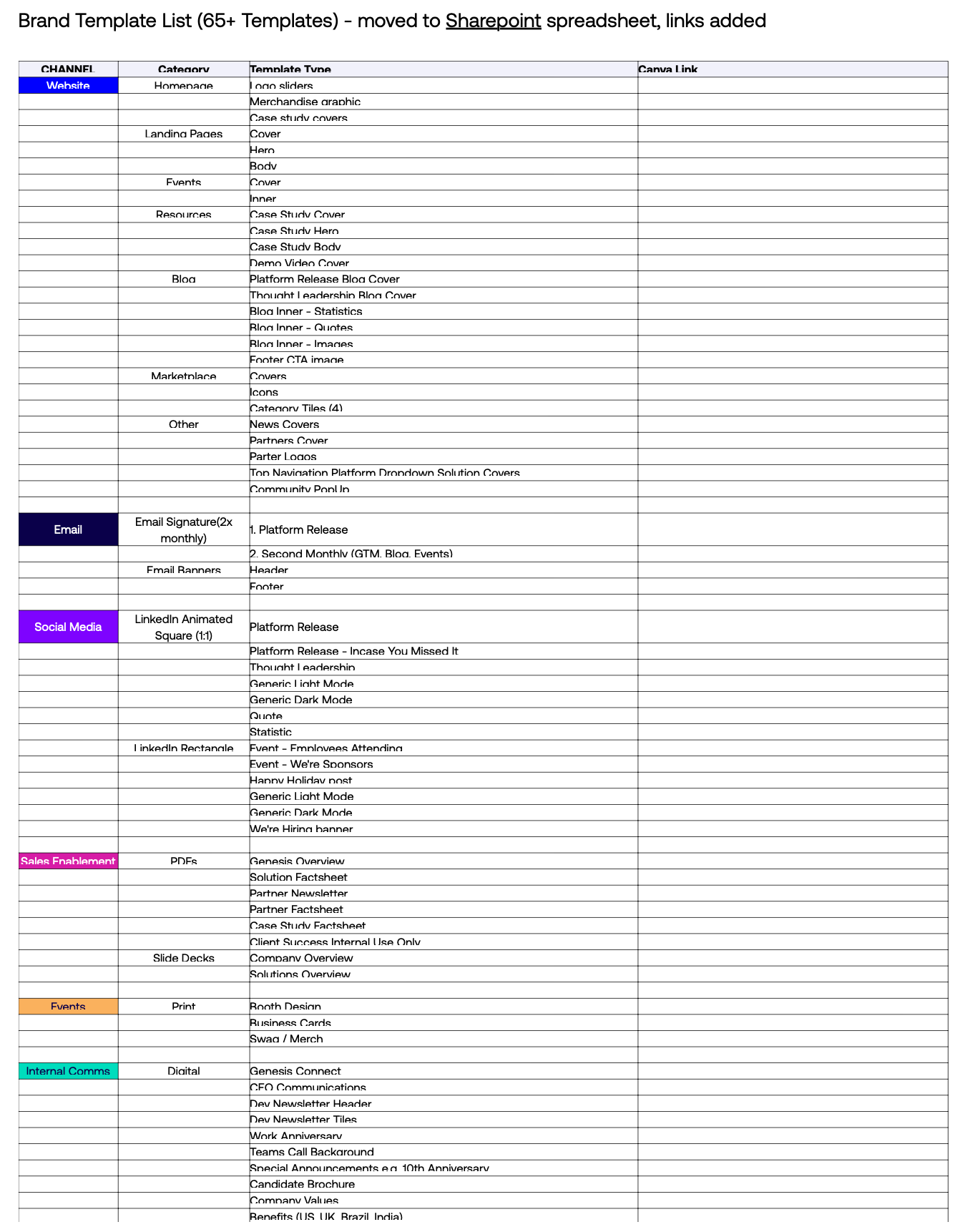
The agency had developed the visual identity, but like many brand systems, it couldn't anticipate every future need. Marketing campaigns, event materials, landing pages, sales collateral, social media, presentations, and internal communications all required assets that hadn't yet been designed.
My challenge wasn't simply following the guidelines—it was extending them thoughtfully while preserving the integrity of the new brand.
-
I was hired as a Senior Designer and remained an individual contributor while the scope of my role expanded into design leadership, people management, and creative operations.
Alongside my day-to-day design responsibilities, I became responsible for coordinating a small extended design team consisting of:
Freelance Designer — brought in to absorb overflow and expand production capacity
Video Editor — partnered with me on a product marketing video series and website animations
I managed their work from intake through delivery, including:
Communicating marketing goals and managing priorities
Communicating weekly projects and expectations
Assigning work based on capacity and strengths
Reviewing creative
Answering questions and removing blockers
Managing deadlines
Coordinating with internal stakeholders
Providing feedback and direction
Ensuring work remained aligned with the Genesis brand
At the same time, I continued serving as the primary designer for the broader organization—designing campaigns, sales materials, presentations, events, social content, internal communications, web assets, and other day-to-day creative needs.
The experience became an informal test of what a larger internal design function could look like.
-
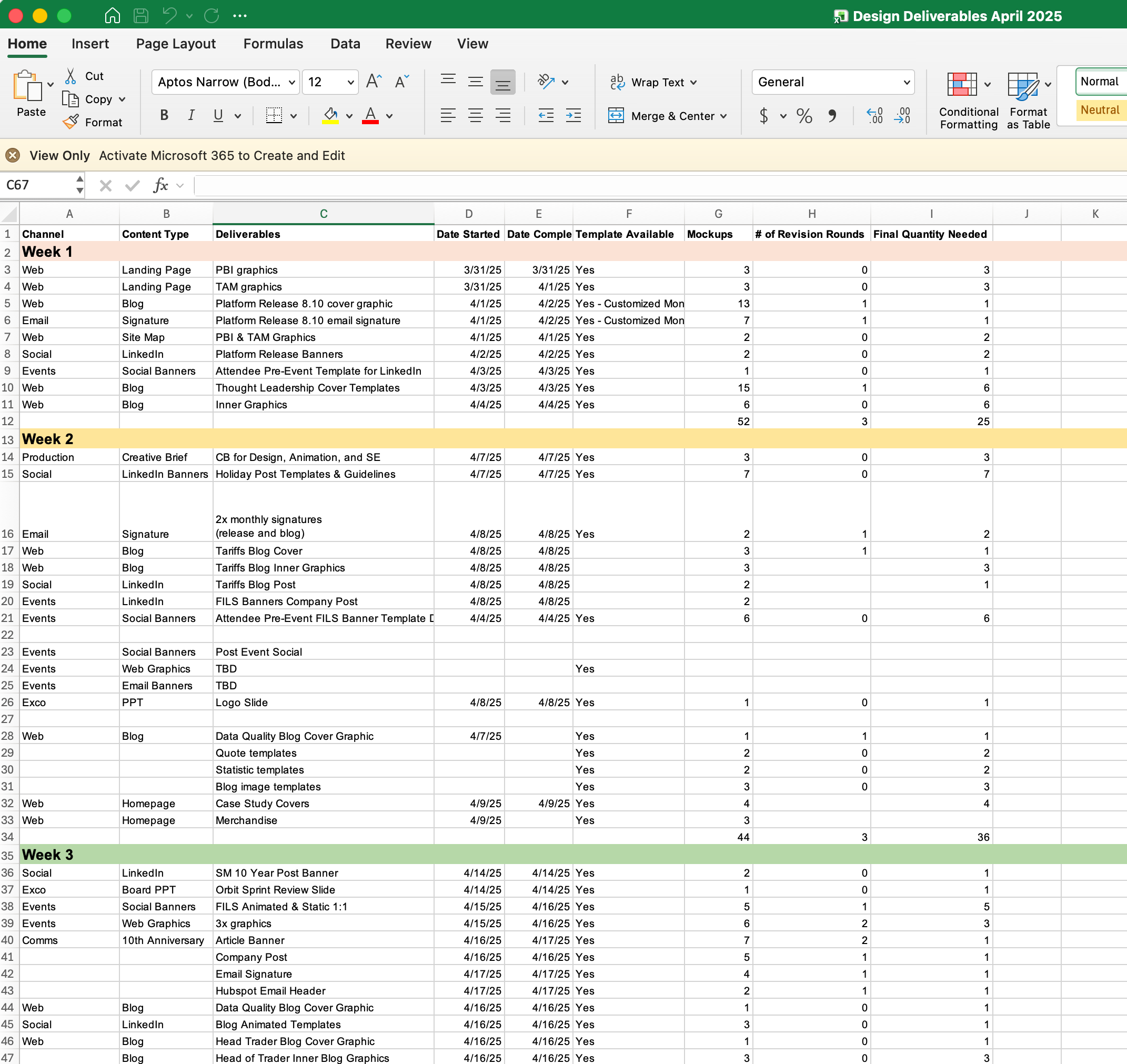
Design requests arrived through Slack, email, meetings, and hallway conversations. There was no central view of what was coming in, how much capacity the design team had, or how company-wide requests should be prioritized against Marketing's existing commitments.
As the volume increased, it became increasingly difficult to answer basic operational questions:
What work is coming in?
Who owns it?
What is the priority?
When can it realistically be completed?
How much design capacity do we actually have?
Which requests should Marketing prioritize?
Where should additional resources be allocated?
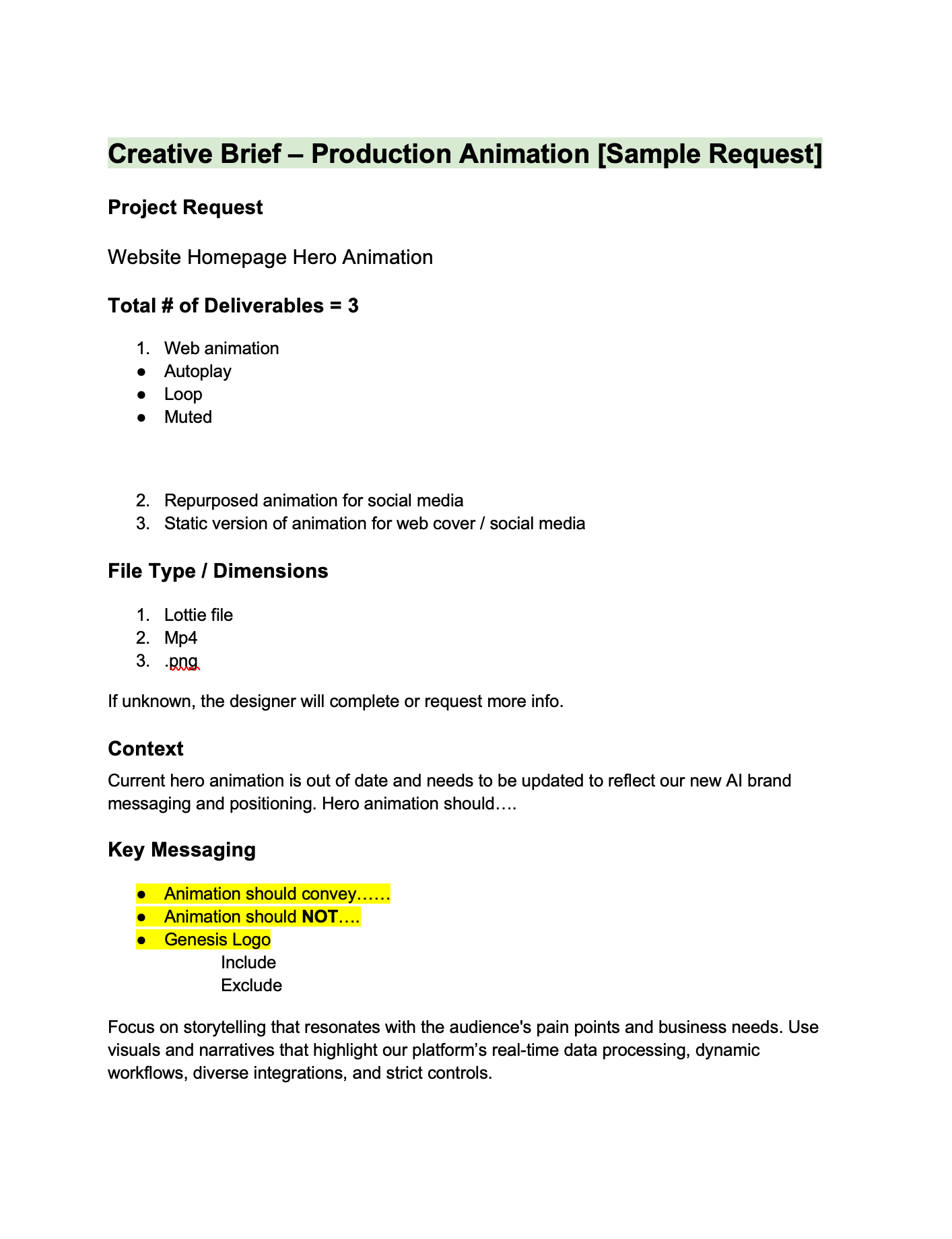
I saw an opportunity to address the problem at its source by developing a simple company-wide form that employees could use to submit design requests.
The request form captured the information needed to evaluate and prioritize the work, then routed requests into Marketing's Asana workflow.
This created a central source of truth for incoming design work.
Instead of:
Slack → email → conversation → interruption → forgotten request
the workflow became:
Request → intake → visibility → prioritization → assignment → delivery
The goal wasn't to add bureaucracy.
It was to make the existing demand visible and manageable.
-
The intake system addressed the flow of work. The freelance and video resources addressed the capacity problem.
Rather than attempting to personally absorb every request, I helped create a flexible model where additional creative capacity could be added when needed.
The freelance designer provided additional production support during periods of high demand, while the video editor enabled Genesis to develop a more consistent product marketing video series.
I acted as the connective tissue between the business and these external contributors—setting direction, communicating priorities, reviewing work, and maintaining quality and brand consistency.
This gave Genesis a small but scalable creative model without requiring a large permanent design department.
-
Capacity
The combination of a structured intake process and flexible freelance support made it easier to manage periods of high demand.
Visibility
Marketing gained a clearer view of the true volume and variety of design requests coming from across the organization.
Prioritization
Requests could be evaluated against existing Marketing priorities instead of being handled purely according to who asked first or who happened to ask most often.
Leadership
I moved from simply completing design work to directing how design work moved through the organization—including setting priorities, coordinating contributors, managing deadlines, and making decisions about capacity.
Scalability
The foundation was built for a design function that could grow beyond a single person.
-
This experience changed how I viewed the role of design within an organization.
Design isn't only about creating assets. It's also about creating clarity.
As demand grew, the highest-value problem wasn't always “How do I make this faster?”
Sometimes it was:
“Why is this request reaching me this way?”
“Who should prioritize this?”
“Do we have the capacity to do this well?”
“What structure would allow the team to handle this more effectively?”Building the intake process—and managing additional creative resources—was my first experience seeing design as an operational function rather than simply a production function.
It taught me that good design leadership isn't necessarily about having more designers.
It's about creating the people, processes, and systems that allow creative work to happen at the right scale, with the right priorities, and without losing quality.
View more of my work at Genesis


